
Fort Collins Architects Pioneer Net-Zero Luxury Living in Old Town
A husband-and-wife architectural team is bringing sustainable luxury to Old Town Fort Collins in 2026 with La Vie Lumière, a compact community of 15 townhomes. Their goal: to demonstrate that high-end living can coexist with doing right by our planet.
Laurie and Bob Davis, of Davis Davis Architects, bring decades of European-influenced experience to the project in their mission to address what they see as an urgent climate crisis.
"We're 8 billion people and counting, and we need to be good stewards of the world's resources for future generations," Laurie explains, reflecting on the environmental issues that fuel their commitment to sustainable architecture. "As design professionals, we want to help our clients understand sustainable choices and climate-sensitive solutions."
Previously, the architects developed L'Avenir, an energy-independent building of four townhomes built with natural materials and streamlined designs. The property features geothermal heating and cooling, solar panels, induction stoves, and other features that minimize impacts on the earth without compromising beauty and utility.
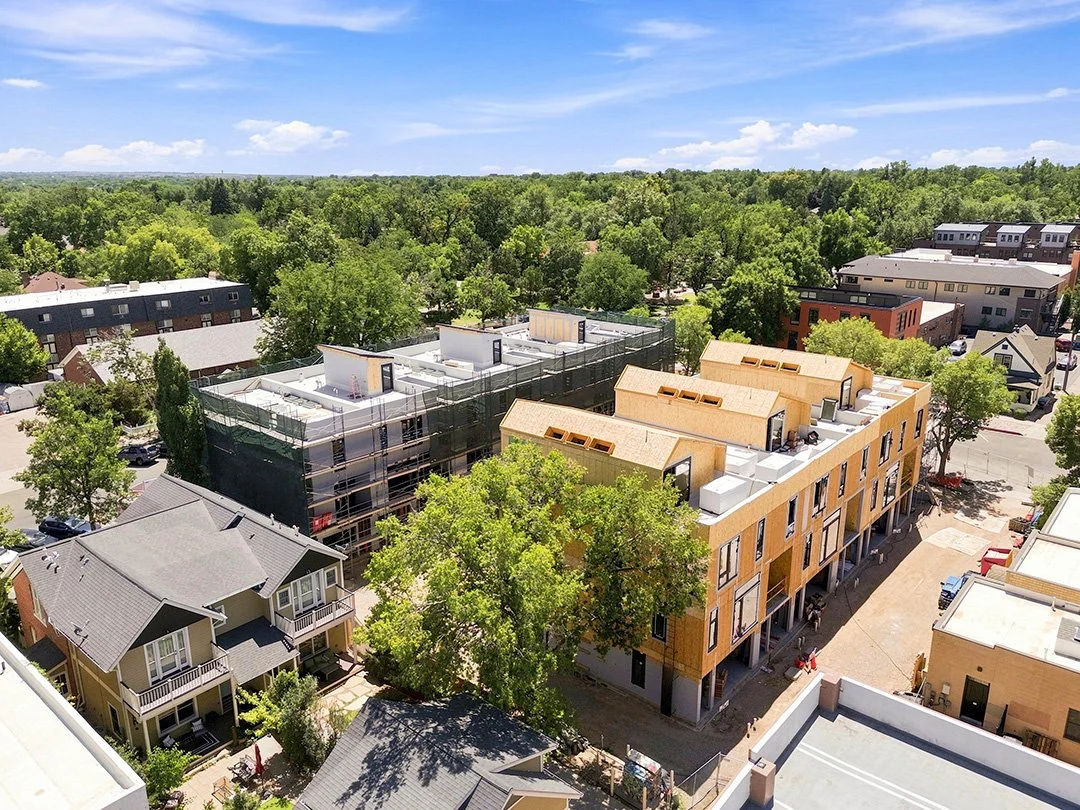
The new development, La Vie Lumière, will be located at 220 E. Oak, the former location of Community of Christ Church. The project incorporates design philosophies shaped by the architects' European education and travel experiences. Laurie's fellowship at the American Academy in Rome and time living in Paris opened her eyes to compact, community-oriented living where smaller private spaces are balanced by a rich public life. Meanwhile, Bob studied Danish architecture at The Royal Danish Academy in Copenhagen, where he developed expertise in Scandinavian design — creating spaces that draw in natural light and incorporating natural materials.
European Design Meets Colorado Sustainability
La Vie Lumière is a French term that means both "living in light" and "living lightly," a dual theme that incorporates European influences while aligning with Fort Collins' climate goals. Through the "Our Climate Future" plan, the city aims to achieve carbon neutrality by 2050 through specific initiatives to greatly reduce greenhouse gas emissions, reach 100% renewable electricity use, and achieve zero landfill waste by 2030 — an ambitious goal just five years away.
"It's not commonly talked about, but typical building materials and approaches often impact our health and harm our planet," Laurie says. "As architects, we need our work to address these challenges through healthy and sustainable choices, but we absolutely can't forget about making something beautiful and highly functional."
The new development's building design draws heavily from Finnish architect Alvar Aalto's philosophy of maximizing natural light through simple, elegant forms. Each townhome features floor-to-ceiling French windows and ten-foot ceilings. This design allows light to penetrate deep into spaces, bouncing off floors and ceilings to create bright, welcoming interiors.
"The higher the window, the deeper the daylighting zone. More light can come in, bounce off the floor, and reflect back into space," Laurie explains, describing how this principle transforms the living experience, even with Colorado's variable weather.
Cutting-Edge Sustainable Technology
Beyond aesthetics, La Vie Lumière offers residents a technological leap in sustainable construction. The townhomes feature 14-inch-thick walls (nearly double the typical eight-inch standard) packed with rockwool insulation, an inert natural material made from spun rock that provides superior thermal performance while being fireproof and mold-resistant.
"Rockwool is much better than using foam, which is what people generally do when they put insulation on the exterior," Bob notes. "Expanded polyurethane foam is not only a global greenhouse gas emitter, but chemical exposure can also be bad for the employees installing it. It's just not a sustainable material."
The buildings achieve exceptional energy efficiency through triple-glazed windows, a rarity in Fort Collins, and advanced air-sealing techniques.
To maintain fresh air in these tightly sealed buildings, each unit includes an energy recovery ventilator (ERV) that continuously exchanges stale indoor air with fresh outdoor air while transferring thermal energy between the airstreams. This system ensures optimal indoor air quality without wasting energy on heating or cooling.
Solar Innovation and Net-Zero Goals
The development aims to make ten of the 15 units completely net-zero energy through solar power integration. The architects are exploring Fort Collins' virtual net metering system, which would allow multiple rooftop solar installations to function as a single system, distributing clean energy across all units regardless of the roof orientation on the individual units.
"This innovative approach enables us to bring energy independence to the units with less direct sun exposure, like those with roofs in building shadows or without a southern-facing exposure," Bob says.
Community-Driven Development
The La Vie Lumière development team is the result of a close collaboration between residential neighbors and business owners who want to make a positive impact on their local community. Each member brings unique skills and expertise to the project, from sustainable design and construction to financial oversight and project management.
Despite having decades of experience, they don't sound like average real estate developers when discussing this project. Instead of costs and schedules, they speak of the planet, shared values, community, and what one team member fittingly calls "the light that keeps illuminating the way forward."
The site demolition is a prime example. In late spring, the team razed the previous church building, but not before saving all reusable building materials. Working with Circular Building Materials Co. of Gunbarrel, Colorado, they carefully deconstructed the building rather than demolishing it — diverting fixtures, millwork, furniture, concrete and metals from landfills to local nonprofits and recyclers.
Salvaging, reusing and recycling the materials also created 556 hours of paid labor locally and helped the team avoid significant CO2 emissions — an amount equal to what four U.S. households create in a year.
Notably, the demolition used circular economy principles without increasing project costs. The team even allowed the Fort Collins Fire Department to use the empty building for training exercises before deconstruction began.
"The circular economy goal is to keep things in use for as long as possible," Laurie explains. "You don't throw away things that aren't broken. When you demolish a building sustainably, you want those things to be reused or repurposed or recycled."
Indoor-Outdoor Living in Style
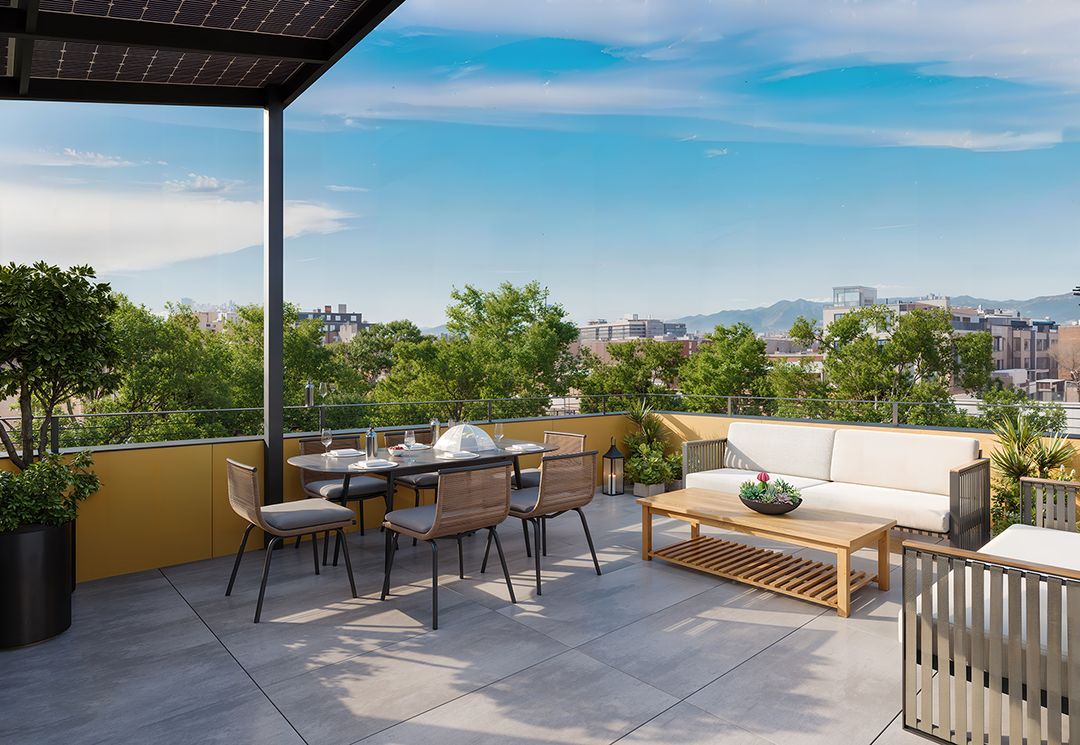
These townhomes offer more than sustainable living. They're intentionally designed with natural elements like European tilt-turn windows that can open fully for maximum light and ventilation, or tilt inward to bring in fresh air securely. Every unit includes outdoor spaces on both the east and west sides, while six larger units feature rooftop decks with views of Colorado's foothills.
Using natural materials and ventilation throughout also reflects the Scandinavian influence. "There's an emphasis in Danish Scandinavian design on natural materials and the feeling of warmth that you get from wood," Bob notes. "It's common in Scandinavian culture to incorporate biophilic approaches that contribute to one's humanity, to create a feeling of warmth, tactility and a healthy connection to our natural world."
Certification and Performance Standards
The development is pursuing multiple sustainability certifications, including LEED Platinum, U.S. Department of Energy Zero Energy Ready Home, and U.S. EPA WaterSense. The standards address not just energy performance, but also materials selection, site planning, water conservation and indoor air quality.
This commitment extends to contractors, who must separate all construction waste into identifiable categories for recycling — a practice that supports both LEED certification goals and responsible resource management.
Market Timing and Availability
With construction beginning in mid-August and an anticipated 12-month build timeline, the first La Vie Lumière townhomes are expected to be completed by late summer 2026. The team is already accepting pre-sales.
La Vie Lumière townhomes will appeal to environmentally conscious buyers who value both luxury and sustainability, as well as living in a walkable, bikeable city a short distance from Colorado's many natural attractions. Visit lalumiereliving.com for construction updates and other details.
Looking Forward to a Net-Zero Fort Collins
Fort Collins' supportive utilities department and progressive environmental policies create an ideal environment for projects like La Vie Lumière. The city's comprehensive plan includes climate action goals that align with the development's net-zero aspirations, while utility incentives help make advanced building technologies more accessible.
"Fort Collins has a very sustainably minded plan for the city," Bob observes. "The utilities department helps builders and architects and developers apply sustainable practices and offers incentives for those who do."
The success of La Vie Lumière could set a new standard for luxury residential development in Fort Collins and similar communities. As climate concerns and energy costs continue to grow, developments like La Vie Lumière offer a glimpse into a future where homes actively contribute to environmental solutions while providing exceptional comfort and style. For Fort Collins residents who want to align their housing choice with environmental values, these thoughtfully designed townhomes present an opportunity to live lightly while living well.
